

Traveling from Hanoi to Chiang Mai: Your Ultimate Travel Guide
Disclaimer: This page may contain affiliate links. More info in our Privacy Policy
PLANNING A TRIP FROM HANOI TO CHIANG MAI?
You’ve come to the right place — as we have traveled around Vietnam and Thailand since 2015!
Hello, globetrotter! Ready for your next epic journey from the bustling streets of Hanoi to the serene landscapes of Chiang Mai? Well, sit tight because we’re about to take a virtual voyage.
We’ll journey over mountains, past shimmering temples, and through bustling marketplaces, with street food aromas wafting in the air.
Before we start though, let’s chat about why preparation is your trusty compass. It’ll guide you through this exciting adventure!
Read also: Getting from Chiang Mai to Hanoi
How to Travel from Hanoi to Chiang Mai?
Direct Flight from Hanoi to Chiang Mai
Taking a flight is like ripping off a band-aid: quick and easy! Various airlines offer this route, including Thai AirAsia, VietJet Air, and Bangkok Airways.
The flight usually takes about 1 hour, 35 minutes, give or take. The costs can vary, but expect to shell out around $100 to $200. Remember, the early bird gets the worm – or in this case, the best deal!
Overland Travel from Hanoi to Chiang Mai

For those of you who relish the journey as much as the destination, going overland could be your cup of tea. There are bus and train options.
But there’s no direct trip so you have to book multiple trips, usually sleeper buses, over a few days – a total of about 27 hours by buses.
Cost-wise, it’s about a total of 100-120 USD. But hey, it’s not just about getting from point A to point B.
It’s about the rolling landscapes, the random stopovers, the fellow travelers you’ll meet along the way. Yes, it’s time-consuming, but the memories? Priceless!
Via Laos (for the adventurous travelers)

This route might take a few days, but it’s filled with the charm of the Laotian landscape and culture. You’ll journey through Vientiane and Luang Prabang, with an opportunity to visit the famous Kuang Si Falls in Luang Prabang.
Expect to spend about 150-200 USD on this route, but remember, the value of this option lies in the experience, not just the destination!
Itinerary from Hanoi to Chiang Mai via Laos
- Hanoi to Vientiane by sleeper bus: 24 hours, 25-35 USD
- Vientiane to Luang Prabang by sleeper bus: 12 hours, 20-30 USD
- Luang Prabang to Huay Xai by sleeper bus: 11 hours, 20-25 USD
- Huay Xai to Chiang Khong via Laos-Thailand Friendship Bridge: 30 minutes by bus or tuktuk
- Chiang Khong to Chiang Mai by bus: 5.5-6.5 hours, 10-20 USD
Read also: Getting from Hanoi to Vientiane
Arrival in Chiang Mai
Touchdown, Chiang Mai! You’ve arrived, but the adventure has just begun. Let’s figure out the next steps, shall we?
Getting from the Airport to the City Center
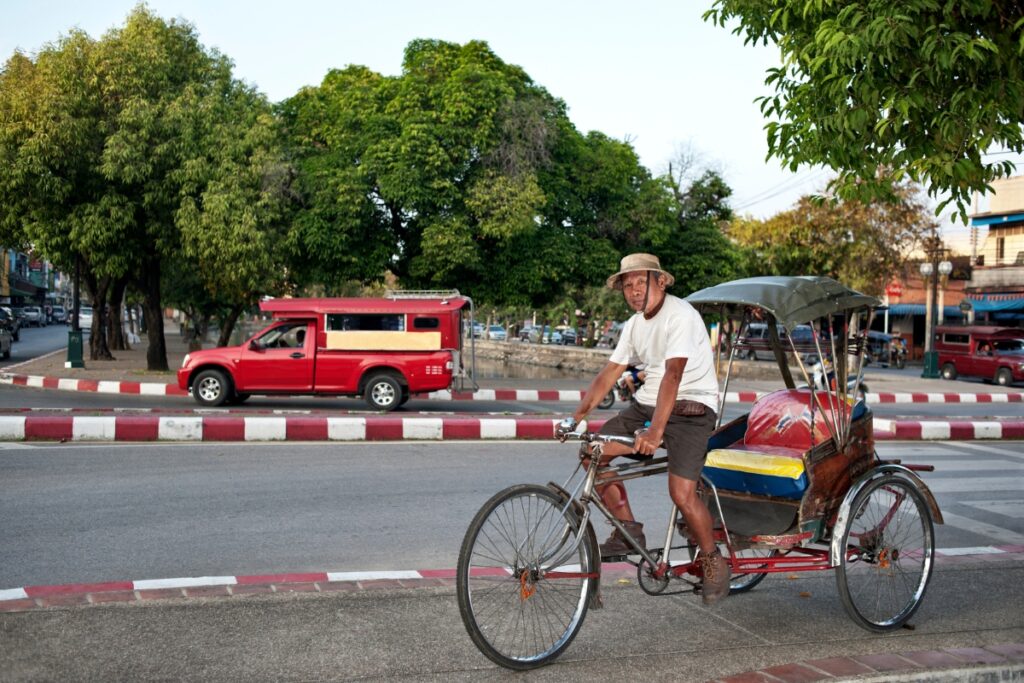
First things first – you’ve got a bunch of options, from taxis to tuk-tuks, and even songthaews (shared taxi trucks unique to Thailand).
A typical taxi ride to the Old City will set you back about 150-200 baht and take about 15 minutes. Remember, always agree on a fare before hopping in to avoid any unpleasant surprises!
But wait, there’s more. You can also book a Grab car straight from the airport!
If you don’t have an international or Thai sim card, simply connect to the airport’s free WiFi, and voila – you can get a Grab car in no time.
It’s a quick, convenient, and often cheaper way to get to the city center. I often try this method when getting to a new Southeast Asian city.
Why Choose Chiang Mai as Your Next Destination?
The Charm of Chiang Mai

Imagine: You’re standing amidst a sea of vibrant orchids, beneath the shadow of a centuries-old temple, its golden spires piercing the clear, blue sky. You’re in Chiang Mai, a city that embraces its past while looking to the future.
The charm? Oh, it’s in the gentle waft of incense from the temples, the intricate Lanna architecture, and the lantern-lit streets during the Loy Krathong festival.
So much more than a city – it’s an experience that’ll etch itself into your memory.
Comparing Hanoi and Chiang Mai

Now, let’s talk Hanoi and Chiang Mai. Both are exotic and captivating, but in their own special ways.
Hanoi, with its narrow streets filled with vendors, where pho stalls mingle with centuries-old colonial architecture.
Chiang Mai, on the other hand, is like a breath of fresh air, with its tranquil temples, mountainous backdrop, and slower pace of life.
The food?
In Hanoi, it’s about savory broths and street-side barbecues, whereas Chiang Mai will delight you with khao soi (curried noodle soup) and sai ua (spicy sausage).
Different, but equally enchanting, wouldn’t you agree?
Preparing for the Journey: What You Need to Know
Necessary Travel Documents
To visit Chiang Mai from Hanoi, you’ll need your passport (with at least 6 months of validity left) and potentially a visa, depending on your nationality.
Remember to double-check these details well in advance.
Currency
The currency in Thailand is the Thai Baht. You can exchange your currency to Baht in Hanoi before leaving, but the rates might be less favorable.
You might also get a better deal if you withdraw cash from ATMs in Thailand, but keep an eye out for those pesky transaction fees.
Now, here’s a golden nugget of info – if you’re already in Chiang Mai and need to exchange currency, head to Mr. Pierre at 119/2 Tha Phae Road, Tambon Chang Moi. They offer one of the best exchange rates in the city. Handy, isn’t it?
Best Time to Travel
So, when should you visit Chiang Mai? Well, there’s no wrong time really, but weather-wise, you might prefer the cooler months from November to February.
But if you’re a festival fan, you’d love April (for the vibrant Songkran water festival) or November, when the sky is illuminated with thousands of lanterns for the Loy Krathong festival.
Now, isn’t that something to look forward to?
Where to Stay in Chiang Mai
The Old City is a great choice, brimming with temples and close to the action. Nimmanhaemin area, meanwhile, is the trendy neighborhood, filled with cool cafés and boutique shops.
Budget accommodation can start as low as 200 THB (approx 6 USD) a night for hostels, while luxury hotels can range from 2,000 to 6,000 THB.
Booking.comMust-try Foods in Chiang Mai
Let’s talk food. Northern Thai cuisine is a flavor bomb waiting to explode in your mouth.
Don’t miss out on khao soi, a creamy, spicy noodle soup, or the fiery sai ua sausages.
Street food stalls, local markets, and even high-end restaurants serve up these delicious dishes. Bon appétit!
Top Things to Do in Chiang Mai
From visiting the ancient Wat Phra That Doi Suthep temple to shopping at the bustling Night Bazaar, there’s something for everyone.
But if you’re looking for offbeat experiences, why not take a traditional Thai cooking class or visit an ethical elephant sanctuary?
Klook.comFrequently Asked Questions (FAQs)
How can I travel from Hanoi to Chiang Mai?
You have several options to travel from Hanoi to Chiang Mai. The quickest and most convenient way is by air, with several airlines like Thai AirAsia, VietJet Air, and Bangkok Airways offering this route.
Alternatively, you can go overland via Laos for an adventurous, scenic route.
How long does the flight from Hanoi to Chiang Mai take?
The flight from Hanoi to Chiang Mai typically takes about 1 hour, 35 minutes. However, the total travel time can vary depending on factors such as the airline you choose and whether your flight is direct or has stopovers.
Where should I stay when visiting Chiang Mai?
The Old City is a popular choice due to its proximity to major attractions and its abundance of accommodation options. If you prefer a trendier vibe, the Nimman area is known for its hip cafés and boutique shops.
What is the best time to visit Chiang Mai?
The best time to visit Chiang Mai is generally during the cool season, from December to March.
However, if you wish to experience local festivals like the Songkran water festival or the Loy Krathong lantern festival, you may want to visit in April or November respectively.
What are the must-try foods in Chiang Mai?
Northern Thai cuisine is a highlight of any visit to Chiang Mai. Be sure to try dishes like khao soi, a creamy, spicy noodle soup, and sai ua, a fiery local sausage.
What are some top things to do in Chiang Mai?
Some popular activities in Chiang Mai include visiting the ancient Wat Phra That Doi Suthep temple, shopping at the bustling Night Bazaar, taking a traditional Thai cooking class, or visiting an ethical elephant sanctuary.
Where can I exchange currency in Chiang Mai?
One of the best places to exchange currency in Chiang Mai is at Mr. Pierre at 119/2 Tha Phae Road, Tambon Chang Moi. They offer one of the best exchange rates in the city. It’s always good to have some cash on you, as not all places accept cards, especially smaller vendors and transport services.
Conclusion
Remember, every journey is an adventure, and it’s all about making memories.
Whether you fly straight or take the scenic route, whether you prefer hostels or luxury hotels, the magic lies in the journey and the incredible destination that is Chiang Mai.


